
 EN
EN
 FR
FR
 DE
DE
 ES
ES
Interview by Daria Podsiadlo, ShareDoc Ambassador
How did Think-Film start?
Danielle: I started it in 2016. After doing a postgrad in human rights, I got to Brussels and thought I’d landed my dream job — the UN-type job I thought would be perfect for me. And then I was like, holy shit, this bureaucracy is terrible, I will not survive here. It’s like a snail, pushing one paper at a time.
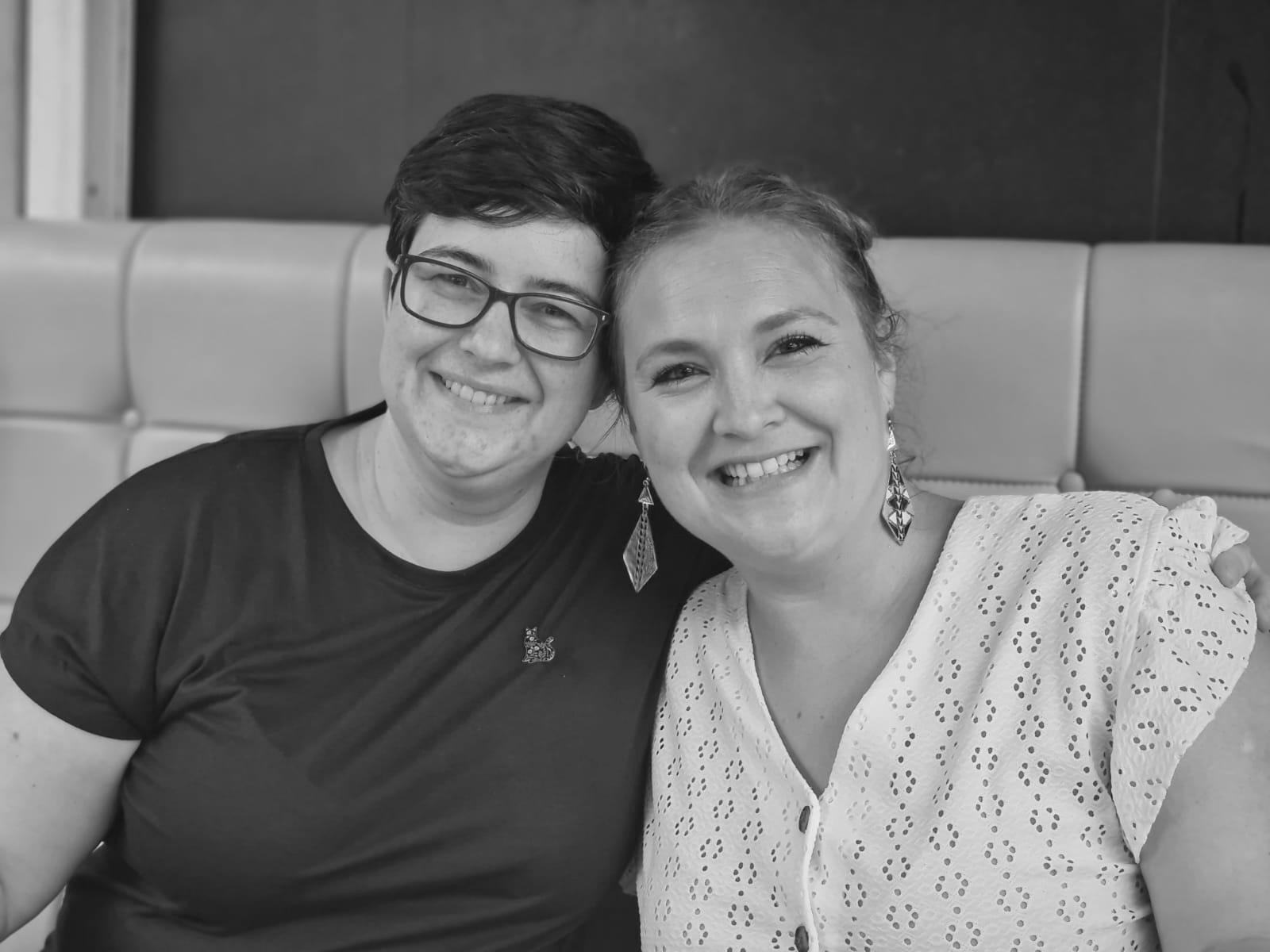
But what I did see was that the European Parliament, which represented people, had this weird vacuum in the system of change. They were accountable to the stories of the people they represent, but they needed to see the work live to really believe in it. So we brought in actors and storytellers — Holocaust commemoration, frontline defenders, whistleblowers. And that’s when the intersection happened for me. I needed to be working with arts and policy, bringing in the real stories they were supposed to be defending.
And how did Amy come into it?
Danielle: I found Amy in Brussels. I was consulting for an intergroup — a cross-party parliamentary group defending minority rights — and Amy was at one of the NGOs. We were both lobbying the EU’s foreign-affairs institutions on cases like Raif Badawi’s. I watched her defend a case in front of the External Action Service, the foreign ministry, and I thought: I need a right-hand person like that — someone who can take my wild visions and say, “Hang on, Danny, here’s the plan, here’s how we actually deliver this.” Over the years the tables turned; now I’m sometimes the one asking her, “Are you sure we can do this?” She’s adopted some of my wildness and I’ve adopted her discipline. Impact really is an army — you can’t run it alone.
Amy: What we’ve really built together is turning that vision — which had only happened in individual cases — into a structured model. That’s what sets Think-Film apart from so many other impact producers: we’re not just working on a case here, a case there. We have a model we apply, and that we’re exporting and encouraging others to use through our training. It’s always been part of building the market — engaging producers and directors who’ve never thought about impact as part of their creative practice, and creating space for impact producers, whether that’s Think-Film or anyone else, to have projects to attach to.
What was the first film that came to Think-Film?
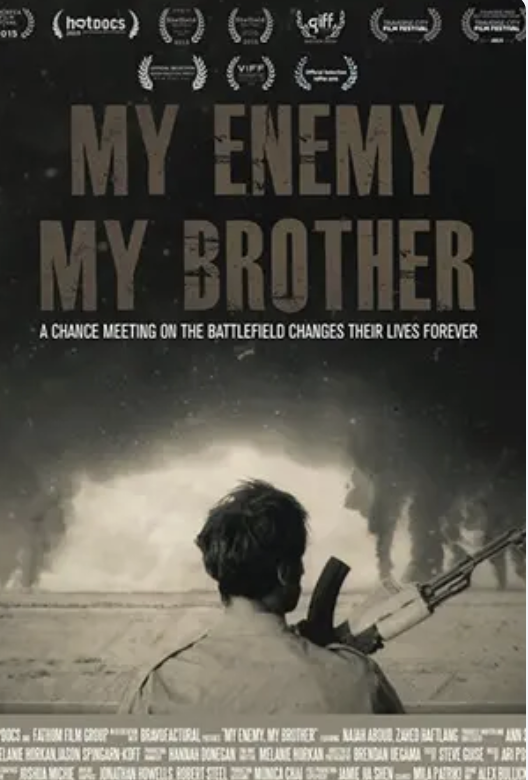
Danielle: The first film was My Enemy, My Brother — a friend of mine, a filmmaker in Barcelona, had made a New York Times Op-Doc short and came to us saying, “We need to get this to Obama.”
I had no connections to Obama — but I realised that when you have great stories and a great idea, people want that. So soon enough, if you’re stubborn enough, you find your way to Obama. And we did; we showed it at the White House. I’m not politically connected, I’m not part of any clubs or networks, but stories, when you bring them to people of influence, turn those people into champions. They want to go on a journey with you.
That’s when I learned what I call “film lobbying” — that you could lobby for human rights using films. And honestly, most people thought we were oddballs at that point. “Political impact? Are you a propagandist?” There was a lot of pushback. Much of the work we’ve done since has been about changing that mentality across film festivals. It’s almost ironic to now sit in a world where people say, “Wow, political impact, what a great thing.” I remember crying at Berlinale, going around the Marché saying “I’m an impact producer,” and people asking, “What’s an impact producer?” My husband told me to go back in and say I worked with the President of the European Parliament, and tell them what I’d done. And all the same people who’d refused a meeting took one.
That was the day I learned how much packaging impact mattered to people.
How do you make sure everyone gets what they want out of a campaign?
Danielle: The honest truth is every filmmaker wants, primarily, distribution. They want as many people as possible to see their film — that’s number one. Many of them want to win awards. They think the word “impact” will solve that problem without any clear strategy, without the time, the implementation, the serious number of hours and energy that goes into building the audience to make it possible. We’re not saying it’s a bad thing. The issue is that when they come to us about impact, they say they want systemic change. And you go: well, no — you’d like a million people watching your film. That’s okay. We’ve changed the model slightly over time, because we realised that what people actually want is press, audience, distribution, awards. So now we converse with the industry — with producers and directors — around one of those core objectives, and show how impact can deliver it. We won’t do any of it without real change. Our systemic change will get you press, audience, and help with awards campaigns — but we’re not just going to do marketing. There are plenty of great publicists and sales agents for that. If you want us, you have to be ready to do distribution differently — as Beha Wangadu from Kikuyu Land said, to “be a traitor for freedom.” Find disruptive models, run events, release early, challenge your distributor. We’ll achieve those things with you, but in a much more unconventional way.
How do you know when a campaign is over?
Amy: At the beginning of every campaign the fundamental thing is to define what success looks like, together with the whole team, because that becomes your north star. We’ve got more and more sophisticated over the years about measuring it — not just reach, but the depth of engagement, even the financial value of the press. With campaigns that happened some time ago, we can now look back and ask what that change meant in terms of society — because we weren’t just measuring in the moment, we were measuring what the moment means.
Danielle: Yes, the whole point of measurement is to understand how you build on a movement. We realised we’d become almost an impact-addict economy — junkies for instant impact with a quick result we can point to and say “done it.” But impact isn’t always 24 hours later. The glyphosate campaign we’re working on now might not change the legislation for six years — and that could be the moment it really matters. So we spend a lot of time staying on top of issues, to know when the right moment is to reintroduce a film.
It’s about the big and the small. We ran a huge counter-corruption campaign around Navalny, with sanctions on Russia with amazing results — but you can only do your best. You can’t guarantee someone stays alive; you can only try. Perhaps I’m intense, but I sometimes tell the team: we just have to die trying. It’s not about how amazing the end result is — it’s about the commitment and conviction you had in the process.
Amy: There’s an analogy we use: the relay race. A filmmaker picks up the baton from somebody, makes their film, contributes their piece to the world, and hands it on. Your impact doesn’t have to solve the problems of the world in one go. It might be a tiny baby step along the road — but it’s a step along the road. It’s meaningful, it’s measurable, and it’s done something.
Danielle: We also help with making sure filmmakers don’t become NGO owners. I’ve found these true purist filmmakers who’ve spent five to ten years of their lives with their protagonists and can’t separate themselves from the change they want to make — and then they don’t get to make their next film, to use their power for the greater good. So we try to help them find a balance with a handover model.
At ShareDoc we experience that if there’s no clear next step for the audience within the first minutes after watching a film, the momentum is usually lost. How do you solve that?
Danielle: You’re addressing something really important — and polemical. We all deserve, as individual audience members, to watch something and decide, “I’m going to take this action now.” But the reality of life is full of traffic and noise. There’s so much going on we have no time left, we can barely manage our own family lives alongside work.
There’s been a general underestimation of the power of direction in impact campaigns — giving people limited choices they can feel connected to. Having one succinct nucleus, one driving action, so that an audience in Copenhagen and an audience in Sundance and an audience in Brazil and an audience in the UK can all go, “Actually, we’re part of the same vision.” It might look like you’re directing everyone one way, even dictating the terms of social justice. But we’re addressing a polemic: audiences just don’t have time and we risk losing any action. So at Think-Film we often just go, “We’re going with this,” and then equip everyone to explain why. Human rights are still one of those universalities — the basic principles of freedom apply everywhere. We all eat, drink, love, hate. Those are the elements of connection, and campaigns with strong essences like that are the ones that really succeed.
What does an ideal impact-ready world look like?
Danielle: It shouldn’t be expected that impact producers get their money from the NGO world to do the work. Impact producers should be in the budget of the film as a line item, like the editor. Film funds, film institutes, philanthropic funds, whatever the financing model is: there should be an impact-production line, a Creative Europe strand for it, and a main programme for impact production in film schools. Just like the art we represent, we should be financially independent — because the financial attachment is where accountability gets lost, even with the best organisations in the world.
The other half is recognition. BAFTA is now running an impact-producers programme. The Golden Globes are talking about impact as a criterion for a documentary prize they never had before. And yet on IMDb, we still have to choose “other.” It’s not an official credit recognised by the guilds.
Amy: Right now it gets tucked into a side budget, or called “audience engagement.” Standardise it as its own line — the same as the executive producer, the producer, the director — and the financing follows. That’s the utopia: impact mainstreamed, in the budget, in the credits, in the film schools.
What kind of projects are you taking?
Danielle: We want artistic, innovative stories with compelling characters, stories addressing the things that matter most to all of us. When people hear “impact,” they think big policy change — climate, crime, politics — but the films that work are the ones that drive you somewhere deeply, emotionally active. Think of the most radical adjectives — hate, rage, compassion, love. If you feel that when you watch a story, you’ll do something with it. Our job is to harness those radical emotions and turn them into change.
Any last remarks to leave readers with?
Danielle: If there’s one call to arms I’d leave, it’s this: I’d love everyone to get behind a documentary category at the Golden Globes. There’s commercial value in it — we’re a genre with an audience — and it’s exactly the kind of thing that changes when the whole industry stands together and asks for it.
Think-Film about ShareDoc:
“ShareDoc is such a great resource for artists and audiences who want to help stories make a real difference in the world; it’s been hugely important to so many films, including our projects Devi, House of Hope, My name is Happy and Mr. Nobody Against Putin . If you’ve seen a film on ShareDoc that you care about, then get involved!” Danielle Turkov Wilson & Amy Shepherd, Think-Film Impact Production