
 EN
EN
 FR
FR
 DE
DE
 ES
ES
Interview with Sergi Doladé by Anne Marie Borsboom, founder ShareDoc
“The commercial side of fiction has interfered in the documentary world completely”
So it's not so much about your point of view as a filmmaker. It's more about how you tell the story to a wider audience, numbers and figures. How many are going to watch this and who is going to buy it.
If I am in power, I do believe that the public broadcasters ought to have varied programs. And within the programs, documentary has to play a major role offering the viewer the opportunity to understand the world they live in. That should be one of the main reasons for a public broadcaster: to be a bridge between a wide audience and the rest of the world. Sergi Doladé
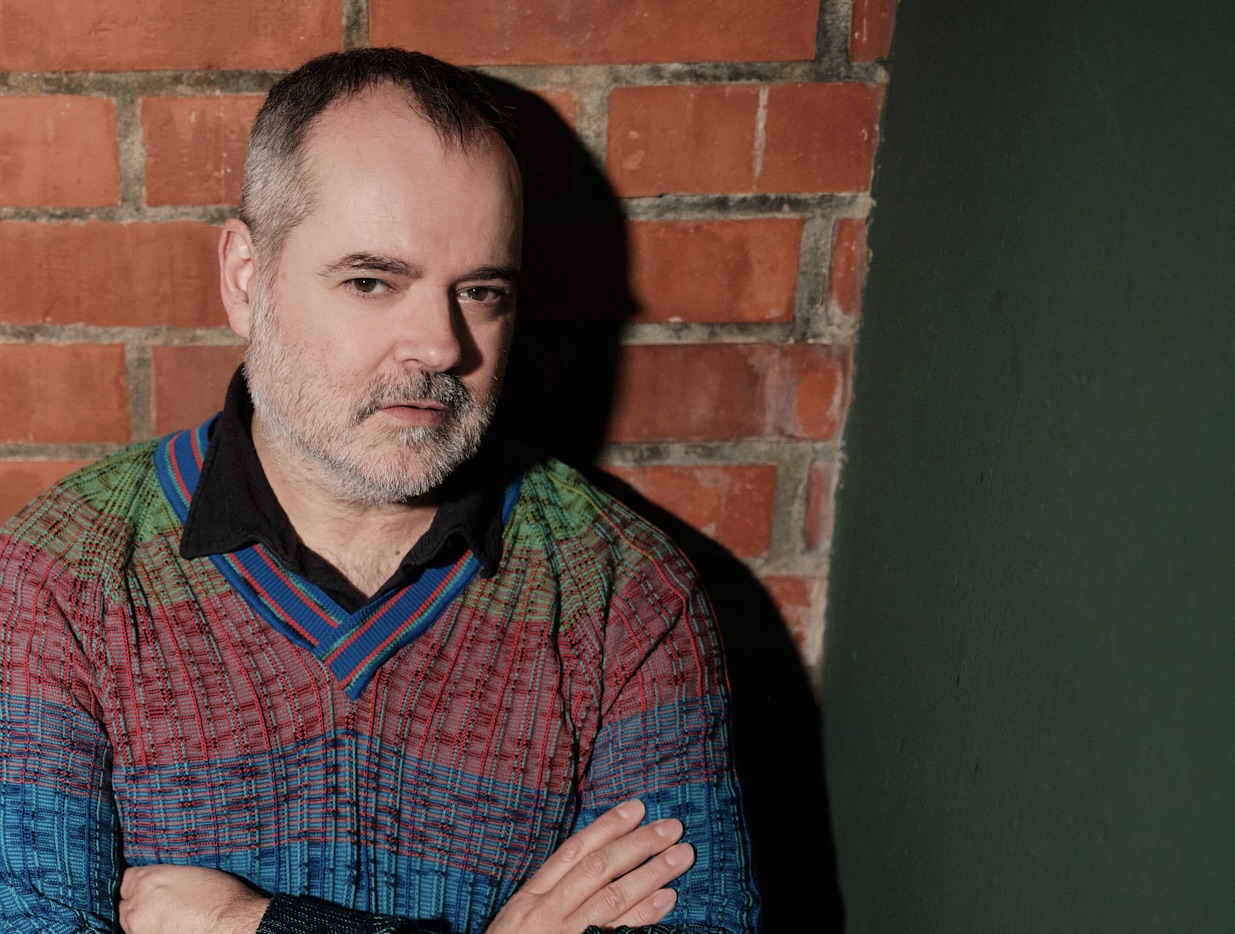
Tell me about your start in the industry
Sergi: MEDIMED started as a dedicated market for co-productions between the North and the South of the Mediterranean. The very first edition was dedicated to fiction and documentary, but right away we understood that these were very different approaches and that fiction has another sort of way of bringing up the projects. On the second edition, we decided that it was going to be only a specific market for euro-mediterranean documentaries.
And before MEDIMED?
Sergi: Before 2000 I worked six years at the European Commission Office in Barcelona, where I dealt with the MEDIA program. So I was very much in contact with producers and filmmakers. When my contract with the EC was ending, a well-known producer and director in Barcelona proposed to help him create an international department in his production company.
I always thought that the film industry was appealing because it's creative, international and deals with emotions as well. My first trip was to the Berlinale for the premiere of his latest film. So it was an exciting start in this sector but it lasted one year. Then the Association of Catalan Producers, asked me to join the new Association of Independent Mediterranean Producers, where I am now. It gathers 400 producers from the Mediterranean basin. From Morocco to Tunisia to Turkey to Greece to Spain. The idea of creating something new and bringing together filmmakers from different backgrounds was exciting.
So you have a long way behind you, what has hanged in the documentary world?
Sergi Wow. Well in the early days it was a small scene of very well-positioned documentary filmmakers in central Europe. Arte played a very good role in the early 2000s. Very well-established production houses that were producing documentaries in a way that felt very easy to do with no sort of complication. Every deal was based in trust.
So that's why we actually created this market. Let's co-produce with people from abroad. Let's bring common subjects to the table. Why not explore new ways of financing and producing with the South and help them to tell their stories? So it was easy in terms of things were just imagined and they became reality. Public televisions were supporting, even experimenting, and helped filmmakers to find their own voice.
So the market was in good condition. That was extraordinary for me, coming from the European Commission, having a background of an institutional framework, here I thought, these are creative people, that do what they really want to do fully supported by the market.
And what's changed?
Sergi: Unfortunately the public television’s right now are confronted to this new more complex scenario. There are more windows, the private players actually changed the game. And the competition is terrible when we actually pay attention to the content.
I mean, the commercial side of fiction has interfered in the documentary world completely.
So it's not so much about your point of view as a filmmaker. It's more about how you tell the story to a wider audience, numbers and figures. How many are going to watch this and who is going to buy it.
Back then it was important also to sort of promote the films, but the most important thing was to make it. And to really have the means to make it as you wanted to do it. You could travel abroad, you could live with those people/protagonists. Time wasn't really a matter to take into consideration for your budget. Those things have changed a lot. Now filmmakers really have to shoot in a very short time, send the images right away and the film has to be aired immediately. So the industry has changed, not only our perception of our business, but also, I think, the content of films that are made. That's undoubtedly.
And if you were the boss, what would you do to make the future better?
Sergi: Oh, I would actually propose the public broadcasters to support documentary in a way that they did before, simply because it proves that when people understand better what's going on in the world, or in their societies. When you understand the complexity of a situation in your society, you're more aware of how difficult it is to manage it politically. I mean, we shift to this simplicity of approaching the news. Everything is a headline, fake news sell papers, and we are confronted to what is real and what isn't real. You cannot trust the traditional media players anymore and that's because there's this interest in shaping societies in one particular way, but not in a democratic way.
So you approached the broadcasters, but in this new world where we are in today, everybody's moving from the broadcasters because they are losing territory.
Sergi : They're losing territory, but at the same time they are still playing a very important part in terms of being the central players in most of the European countries, not to talk about the public broadcasters in the Arab world. I mean, that's another reality. In Europe we are moving towards a model that probably will not be the way it is any longer, but that depends on who is in power.
You are in power for this moment, so what needs to be changed?
Sergi : If I am in power, I do believe that the public broadcasters ought to have varied programs. And within the programs, documentary has to play a major role offering the viewer the opportunity to understand the world they live in. That should be one of the main reasons for a public broadcaster: to be a bridge between a wide audience and the rest of the world. The private media, they can have content regarding fiction, entertainment or sports. That's fair enough. But a public broadcaster has an extra role which is to educate the viewer. That's why we pay taxes. Here in Catalonia, the public broadcaster TV3, many years ago realized that if you program documentaries on prime time, you will have a great audience share. This is proven until today and the program Sense Ficció on Tuesday evening has a very loyal audience.
What made you actually love the documentary world?
Sergi : I must say that even before I dropped into the documentary world I already loved films and had studied cinema in England. They showed me realities that I wouldn't have thought of before.
Can you give titles? a film where you cried your eyes out.
Sergi : Oh, wow….so many, films that touched not only my emotions, but touches my curiosity to know more about that subject and to even take an action towards that reality.
So we get no title from you? Maybe a scene then?
Sergi: When I was 18 I had already seen Agnès Varda's filmography. For me she is a master, as well as Jean-Luc Godard. Documentaries bring yourself to an unknown space.
One title please?
Sergi: One title comes to my memory ‘Searching for Sugar Man’. You cannot take it in one go, this film, you can watch it many times. It is about a human soul that actually makes his life as he really wants it without any strategic moves. It's about being free in your inner self and not to play by the rules. What matters is what drives you towards your own freedom. Yeah. This film I loved.
Documentary is not about fantasy. It can be explained as a fantasy, but it's real. And that's what really moves me when I see something that opens my mind towards a person, a society, a new world that I cannot touch with my hands, but at the same time brings that reality close to my mind. It makes me think of myself and my reality in a different way.
When selecting films for MEDIMED you're looking for such films?
Sergi: Our selection would go into that direction, but also would consider filmmakers that have a great potential but have not got the means because of their political or social reality in the country where they live. I've just now wrote to this Iranian filmmaker who said, thanks for selecting my project, but I cannot make it. I have no financial support. Then you have to bring your imagination on the table and say, okay, how can we do this to make it happen? If we hear that voice this is what we try to do, it's always possible to find a way.
No Other Land, for instance, these guys, they sent me one page treatment. They had an idea. And I thought, well, this is extraordinary. For the first time at MEDIMED after so many years, in 2022 we received a project that is co-directed by two Israelis and a Palestinian guy. And they want to do it together. I said, they have no money but let's help them. So they found their co-producer in Europe at MEDIMED. That's our main goal, to bring people together, to make things happen and to actually intervene as much as we can do, to bring together talented people and of course, the money. It's quite difficult nowadays to make that happen, but it happens :)
Will MEDIMED survive in this difficult circumstance?
Sergi : You have to sort of re-examine yourself all the time. You have to keep going and to give positive results and impressive figures every year. So, yes, selection is very important. You have to be very keen on who you actually end up inviting. But I always like to take risks as well. I mean, nothing is for certain. For different reasons broadcasters are not supportive as they were. They tend to support films that have won a prize at major festivals. They need to sort of place themselves as a window of special films accessible to a general audience. Films that have already been supported by the international audiences.
They won't premiere a film anymore. It's more about showing the Oscar winners.
Is there something you'd like to tell us about MEDIMED for this year edition?
Sergi : Well, we are very excited to have a Moroccan delegation. So that sort of tells you that in Morocco right now, the national film centre is supporting documentaries in a very generous way. We've made an open call for Moroccan projects and we were surprised when we received 85 projects, we selected five.
Back in 2000 when we started, this wouldn't have been possible. I mean, there were not so many filmmakers in Morocco producing documentaries. So that means that within these years, and with the support of 2M television, they now have a very remarkable slot for documentaries. So they've created this network of filmmakers making documentaries in a way that I believe we have to pay attention to. What's going on with the young people in Morocco? Why do they sometimes demonstrate against the government? If you now take a look at what's going on in the Spanish city of Ceuta, where more than 100,000 Moroccans, crossed the border in a few hours a month ago.
This has not only an effect in the Spanish border but it has has en effect in Europe and therefor in our societies. We have to understand why these people are risking their lives. It did not happen out of the blue and we must understand what or who provoked it. Not just to say very simplistically, oh no, we don't want this, but this is a fact, this is happening and this will continue to happen. So we must understand why this is happening before we give an opinion.
Is Medimed also trying to have diversity in gender?
Sergi: Well, this is actually something that curiously we never ever had to pay attention to because it was natural. This sort of gender element, in the documentary industry, when we think about women filmmakers, women directors, women producers and also technicians, it's quite balanced. And in MEDIMED in general, I would say that women are more present than men. When we actually go to the figures, not only filmmakers, but also commissioning editors, distributors, sales agents, fund’s managers, festival programmers. Women are very present and not only in Europe, but also in the south of the Mediterranean.
I hear, that buyers want to have stories about men?
Sergi: I should think that this is also quite balanced… I don't see this. I mean, not in our selection at least.
That's you. But the ones who buy and want to show...
Sergi: It could be the case that films made by men about men's subjects are more present in general terms. That is a fact. That's certainly true. And the market's logics, it's about the supposed audience. But we at MEDIMED intend to balance it.
That's the thing. Festivals or documentary cinema shows mainly women are going and buy the tickets so how can you explain this?
Sergi: But then again, this tells a lot about our culture. I mean, in fiction it’s a fact. That's for sure. And there are women making films, but from a man's perspective. Because most of the time the story is told from a men's perspective. We say the male gaze. That's part of the game. And if you want to play the game, you have to stick to the rules.
But that's interesting enough to make it seen. You have to at least to realize that this is for real, that this is the way it is. Another thing is that there are associations of women filmmakers that are working to sort of change this logics. But probably when we go to the figures again, we will realize that the men's perspective is still majority.
Is there, something you like to say to the audience who will come to your market?
Sergi: Well, I want to say that this year they have the opportunity to meet you/ ShareDoc. And to understand by your examples and by your background as well, because you are also a filmmaker, that at the end of the day the role of a protagonist and the role that the story plays in the perception that we can step from a certain reality in a film leads us to take action. This is crucial for us and the industry to have audience bonding of course. The audience does not only want to watch documentaries to be entertained and not to think about anything in this realty of today. I mean, this is TikTok. This is Instagram. You have other windows to do that. We have to force us out of passive media consumption and demand that we engage deeply with the world around us.
A film makes you think. And by thinking, people may want to take action. That's precisely why I invite you to be our special guest in Sitges.
In 2025 ShareDoc worked with MEDIMED on a online program to show filmmakers how to reachout to the audience if support for the protagonist is needed. This year Anne Marie Borsboom Founder ShareDoc and Daria Podsiadlo ShareDoc Ambassador will be live present at the MEDIMED of 2026 edition in Sitges 8-11 Oktober