
 EN
EN
 FR
FR
 DE
DE
 ES
ES
'On the past and future of female filmmaking'
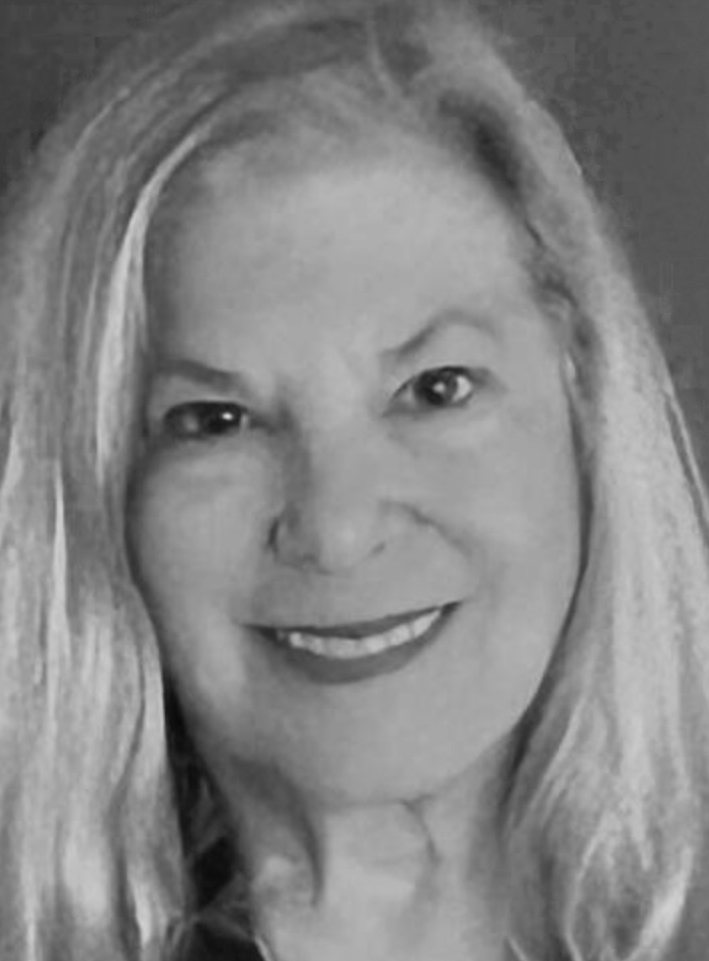
Interview by Anne-Marie Borsboom, Founder of ShareDoc
Debra Zimmerman: We take that message to heart at Women Make Movies. While we’ve traditionally held exclusive distribution rights, we are now actively seeking partnerships. The marketplace for documentaries is incredibly difficult right now. More films are being made every day, but there are fewer revenue-generating avenues to get them out because so much media is available for free.
So my first curiosity is, how did you fall in love with film?
Debra: I went to a university with a major program in art. I wasn't an artist, but my friends were, and one in particular made me believe art was the most important thing in the world. Since I couldn't draw, I turned to film.
I was lucky to have an extraordinary, amazing teacher, Carolee Schneemann. She was an experimental filmmaker from the Fluxus movement, very much a feminist, and she had a huge influence on me. The film that changed my life was Alain Resnais' Hiroshima Mon Amour. When I wrote a paper on it, she gave me a wonderful grade but asked, "Do you think the reason you love it so much is that a woman was the screenwriter?" I knew Marguerite Duras wrote it, but I hadn't put it into the context of my paper. That was a great learning experience about film, women, and passion.
Then you start working as a director?
Debra: No, no. What happened was I had another amazing teacher who taught feminist theater back when Women's Studies was brand new. In fact, I was one of the students that had taken over the administration building at the end of the '70s to fight for Black studies, Women's studies, and to end distributive requirements—which forced everyone to take the ‘classics‘ instead of the subjects we wanted to study.
Anyway, she turned me on to Women Make Movies. I went to a screening and realized it was the first time I had ever seen a film by women, for women, about women, where the entire audience was women. It was an extraordinary, unmatched experience.
I left school, moved to the city, and rode my bicycle in front of their office for three months before I had the nerve to walk in and say, "I want to work here." They gave me a position as an unpaid intern, and that's how I got involved. WMM was actually making films back then and my third mentor, Jackie McSweeney, hired me to work on a documentary about battered women called Why Women Stay. I wasn’t the director but Jackie brought me on board and I ended up as co-producer and editor. Jackie was an extraordinary woman who started making films after having four daughters; she went on to become the first woman grip in the New York union, and later became a lawyer continuing her fighting for battered women.
Why Women Stay actually led me to distribution because it took so long to get made. I thought, "I don't know if I have the patience to take this long to make one documentary." So I turned to fiction and worked on film sets as a production assistant and assistant editor. I ended up on a film directed by Robert Duvall, and it was a horrible, incredibly sexist and misogynist environment.
That experience also made me realize that documentaries mean something, unlike many commercial films. There's power in making a film about an important issue and bringing it to people. So I decided to learn how to raise money to make documentaries and I spent 3 years working at a foundation. Ironically, my job was telling filmmakers “we don't fund film," because foundations didn't back then.
I returned to Women Make Movies in 1983 when it was about to fall apart. I volunteered alongside Lydia Pilcher, who is now a very important producer for filmmakers like Mira Nair, to try to rebuild the organization. I left a well-paying job to be the director of really nothing, as a staff of one in a windowless office. But I loved it from the beginning.
What do you see in the future for women in movies? Is there a future?
Debra: Oh God, that's such a terrible question right now, but it needs an answer. The reality is that we are on a terrible path of going backwards after succeeding in so many ways. What's happening here politically in the U.S. is a catastrophe. It's so depressing for me because we've been distributing films about reproductive rights for years, warning women to watch out. I think young women just haven't been paying attention, and now we're stuck with an incredibly retroactive, racist, and sexist government that is truly harming women.
In terms of the industry, I was just at Cannes, and once again, the number of films by women was very small. It has been like that forever. It’s worse in fiction than in documentary, but even in documentary, we are not close to parity. Furthermore, statistics out of Hollywood show we are going backwards in the percentage of women working across almost all categories. For women of color, the numbers are absolutely horrific. Even though we see more Black, Asian, and Latina women making documentaries, it is nowhere near equity.
Yeah, but is there any light?
Debra: I used to give lectures worldwide about women in cinema, and I always ended positively by highlighting Anna Serner from the Swedish Film Institute. As CEO, she achieved gender equity in just three years. That was a sign of real progress.
Also, the role of women actors and producers has completely changed what we see on television. I’ve become a bit of a television addict because I'm seeing the stories I actually want to see, which don't get as much screen time on the big screen. In television, the showrunner and the producer hold the power, and women have always succeeded behind the scenes. And we see many women producers in documentary now—including women producers partnering with male directors, which is a major, important change.
But it is not just who is making the films – its also about what the films are about. Years ago, we did a study on documentary funding and subject matter. We looked at major funders like the MacArthur, Ford, and Rockefeller foundations, NYSCA, and the NEA. We compared films by men about men, women about women, men about women, and women about men. Unsurprisingly, films by women about women got the least money, and men about men got the most. But interestingly, films by women about men got more money than films by men about women. I'd love to redo that study today to see how it's changed.
Is there any chance you think that it will be in our lifetime, equality in the industry?
Debra: Certainly not in fiction, but perhaps in documentary - maybe within the next 20 years. The entire structure of a fiction film set is built around men. It doesn't accommodate women taking care of children or traveling for months at a time. It’s structured like the military, with a chief ordering everyone around. Documentary is made with much smaller crews, a different timeframe, and can be shot right in your own town.
This collaborative partnership between women is vital. There is strength in numbers. I recently heard the CEO of National Public Radio speak on a panel about the rise of fascism and the clamping down on press freedom in the U.S. She said that exclusivity is a thing of the past; if we don’t work collaboratively, we won't be able to combat what's coming ahead.
We take that message to heart at Women Make Movies. While we’ve traditionally held exclusive distribution rights, we are now actively seeking partnerships. The marketplace for documentaries is incredibly difficult right now. More films are being made every day, but there are fewer revenue-generating avenues to get them out because so much media is available for free.
Educational distribution in the U.S. was historically the mainstay of a filmmaker’s long-term income—we still distribute films made 40 years ago that remain in our top 10. But that market has been heavily damaged by Netflix, educational streamers, YouTube, and the current government’s attempts to destroy PBS. I'm actually going to be on a panel at Sheffield discussing YouTube and its impact on the industry.
We are reworking our model to continue helping women build careers and getting films to both prestigious markets and the communities that need them, while still returning revenue to the filmmakers. Right now, foundation funding for impact campaigns is booming, but the money is generally going to impact producers rather than the production or the distributors. I want to bridge that disconnect because we need to be working together in order for impact work to build a foundation for the long-term distribution of films and their ability to return revenue to filmmakers.
Women Make Movies does two things. First, we assist in production. We come in early or when a sample is completed, offering funding consultations and rough-cut feedback, essentially holding their hands through the process. Because of impact fundraising, we now have about 50 finished projects staying in our program that continue to raise money. We are now looking for a bridge between our production assistance and distribution.
Years ago, we formed the Media Distributors Alliance with five other educational distributors. Last month at Hot Docs, I spoke with Canadian distributors about setting up a joint meeting with American distributors to address the challenges in the industry now as well as the disconnect between impact producing and distribution. Distributors have decades of subject-based outreach experience. For example, we have thousands of contacts in reproductive rights because we've done this for 50 years. When an impact producer starts fresh on a film about reproductive rights, and then moves with their next film to the environment, they have to start from scratch each time. It makes no sense. I don’t mean to be overly critical—we are all under attack by the government—but we need positive collaboration.
WMM doesn’t just do educational distribution. We do theatrical, streaming, and "semi-theatrical" work with museums, libraries, universities, and film societies. We will work with anyone who will show a film.
I always tell filmmakers: if a film is desperately needed because of an uncovered subject, it can be very mediocre and still do extraordinarily well. But if the subject is obscure, personal, or politically challenging, you have to make a really exceptional film to draw an audience. In our "advocacy collection," we have films that are heavily informational and full of talking heads, but incredibly important. For example, Standing on My Sister's Shoulders is a film about unheralded African-American women in the civil rights movement. It didn't go to film festivals, but it has been highly successful because it was deeply needed.
It’s similar to journalistic films. We distribute films by Deeyah Khan, a Pakistani-Norwegian filmmaker living in London. She made two brilliant reportages—one about hatred and racism in the U.S. where she interviewed the far-right, and another about violence against women. She is a journalist; her microphone is in the frame. That is very different from the art of cinema, which I believe can hold more power than traditional broadcast news reportage if distributed correctly. That’s why I'm passionate about distribution, though nowadays I spend a lot of time with our production assistance program, helping women raise money.
I also think a lot about the power of short documentaries. It’s hard to get audiences to watch long films, yet filmmakers feel pressured to make features because festivals and broadcasters reserve their prestige slots for feature-length slots. But so often, a 20-minute version would be infinitely more powerful. Years ago, we distributed a film by Rory Kennedy about women and alcohol abuse. She made three versions: a 10-minute, a half-hour television version, and a feature-length version. I'm shocked more people don't do this. You can release a short version for The New Yorker or The Guardian to build a broad audience, which will naturally drive people to the longer film. We want to utilize this in our remodeling—having our filmmakers create short TikToks and leveraging social media.
Last question, is there anything else you would like to say?
Debra: In truth, dedicating my life to film is a bit strange. I'm passionate about reading. I love books, and I'm obsessed with podcasts—I'm an information junkie. But as I said, there is an unmatched power in making a film about an important issue and bringing it to people. Working with documentaries gives me a feeling in my heart and in my soul.
Note: Meet Debra at Sheffield June 10-15, where she will be hosting a workshop on funding, participating in a panel about YouTube, and taking part in "Meet the Funds" filmmaker meetings.
ShareDoc is invited by Women Make Movies to join their webinar June 25 12:00 PM Eastern Time (US - Canada)
“ShareDoc is a brilliant idea and something we have needed for a long time. Many of our filmmakers want to help the subjects of their films and now we have someplace to send them! Thank you ShareDoc. “ Debra Zimmerman, Women Make Movies