
 EN
EN
 FR
FR
 DE
DE
 ES
ES
An interview with Michelle Plascencia Partnerships and Programs Lead GIPA (Global Impact Producers Alliance) on the power of impact producing, alternative distribution, and putting the audience at the heart of storytelling. Interview by Anne Marie Borsboom, Founder of ShareDoc
What is GIPA?
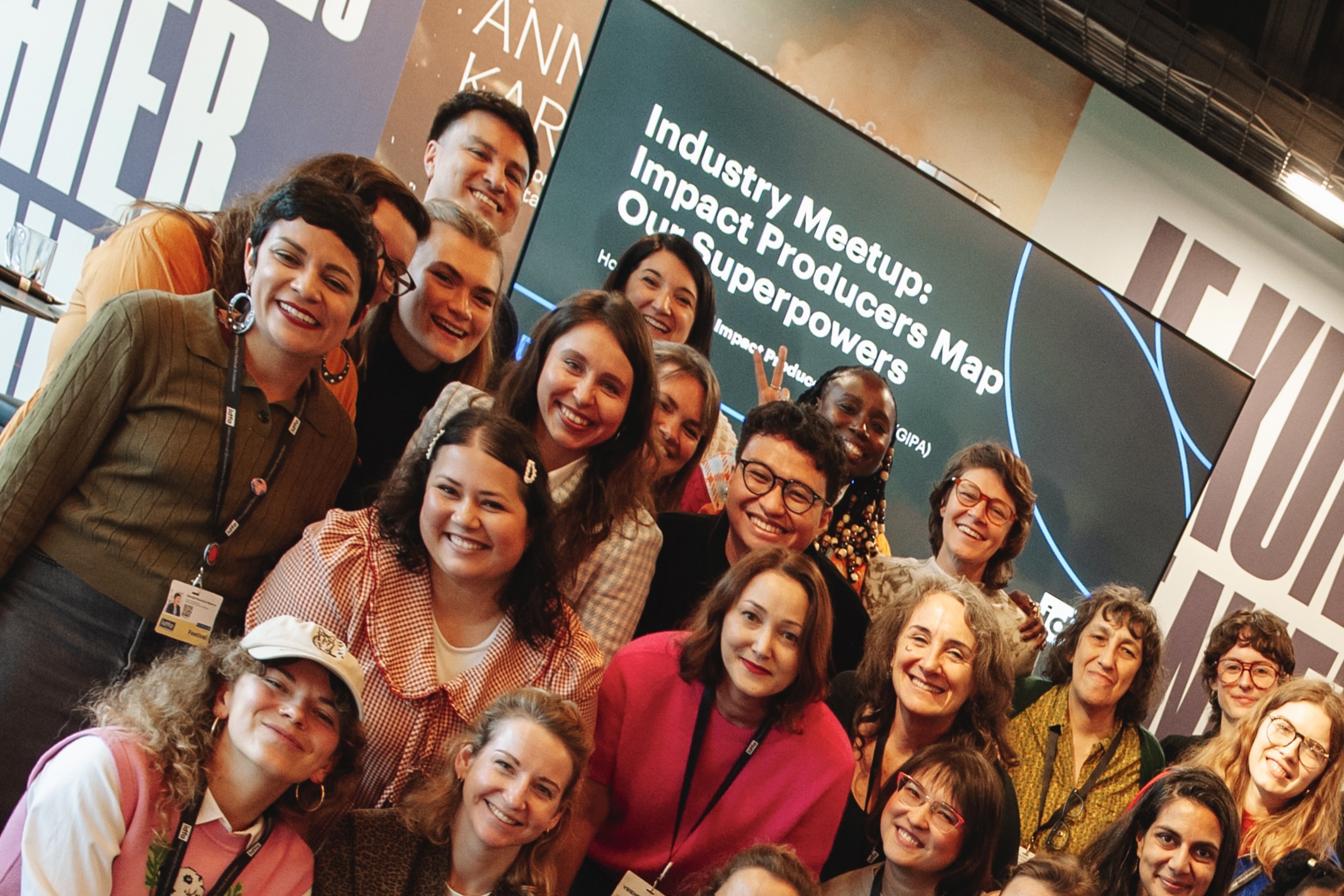
Michelle Plascencia: "We are an impact producers’ network that has grown from a simple listserv to a formalized global community of about 600 members. We now have a digital directory where you can find impact producers from around the world, searchable by region, language, social issue and expertise.
Internally, GIPA is a platform for members to connect, share questions, and exchange opportunities. Externally, we advocate for impact practitioners at major festivals like IDFA and FIFDH, the International Film Festival and Forum on Human Rights in Geneva. Our intention is always to push stories forward and advocate for the power of impact campaigns and impact practitioners.
How do you support filmmakers in designing their impact?
Michelle: "Our focus is to encourage filmmakers to design and implement impact campaigns and invite an impact producer which they can find in the vast GIPA directory. While we celebrate the artistic merit of film, an impact campaign is often a strategic response to the limitations of traditional distribution. The role of an impact practitioner often includes looking for alternative routes to reach audiences who might not have access to film festivals or theaters.
One of our main goals is for film budgets to include impact producer and campaign budgets from the very beginning—not as a secondary thought, but as a primary necessity. By having a strategic way to access films that aren't gatekept by distributors or VOD platforms, we can ensure these stories stay relevant. We encourage filmmakers not to be the gatekeepers of their own work just because the industry tells them 'that’s how it’s done.' We are inspired by models like the Latin American Media Library on Cinema and Social Impact, Kinema, or the DocSociety CSU playlist which share clear examples on the importance of reaching audiences in creative, alternative ways. GIPA also organizes public webinars open to anyone who may be interested in learning more about the field and where to start their own impact campaign journey.
How did your own journey into documentary and impact begin?
Michelle: "It started eight years ago when I moved to Mexico City and began working at DocsMX, a documentary film festival. I was fascinated by the stories coming out of Mexico and Latin America including stories about migration, police brutality, disappearance amongst other urgent human rights issues. I remember being quite emotional at the films that were circulating at the time like the powerful film Armed to the Teeth (Alberto Arnaut, 2018) about two students who were unrightfully murdered and later created an impact campaign focused on truth, memory and justice. Simultaneously, DocsMX was partnering with Doc Society to bring the 'Good Pitch' program to Mexico for the first time. In 2019 as the Outreach Coordinator of DocsMX, I connected with Doc Society, who had started GIPA as a space for practitioners to connect via email. Little did I know at the time that I would later be coordinating the GIPA network. Anyway at the moment in 2019, I began learning more about outreach, partnerships, and how films can help push social messages forward through the Good Pitch model.
Where does your love for documentary storytelling come from?
Michelle: "In college I took a 'Documentary for Social Justice' class at San Francisco State University. I worked with an organization that supported single mothers. Going into that space with a camera and documenting their world in an ethical collaborative way, listening and carefully observing their everyday life, to then share it with the world, is what really sparked my love for the medium.
Years later in Mexico, I fell in love with a film called Los Niños by Maite Alberdi. The way she documented the participants was joyful, honest and careful. Her impact campaign which aimed to destigmatize the independence of adults with Down syndrome and fight for equal pay rights in Chile blew my mind. You watch a film and you ask yourself: 'What do I do now with all this information?' She shared her journey during and after the filmmaking process, emphasizing the importance of partnership building with organizations and more than anything the care she took to include the film participants in the process. This was a huge “aha” moment for me. I realized that the film does not only stay on the screen or film festival circuits but that it can truly positively impact lives and motivate audiences to shift perspectives or activate us to be a part of a movement.
What is your advice for a filmmaker who didn't budget at the start for an impact producer but needs one?
Michelle: "There are various paths to including an impact producer even if they weren't part of the initial production phase. It could come from the distribution budget, or through dedicated fundraising.
Even a small 'seed fund' to start a first meeting is vital. These sessions are about brainstorming, getting ideas down on paper, and seeing what is actually doable depending on the context of the issue. Filmmakers who want to create an impact campaign often think big and imagine huge changes, this is where an impact practitioner can help organize the ideas and create a plan that is realistic taking into consideration the capacity and context. It’s often a catch-22: you need to know what you want from the campaign in order to fundraise for it."
Impact producers are increasingly turning to ShareDoc funddraise for the campaigns. ( o.a Last Ambassador, Devi, Writing Hawa, Purpose — a Wellbeing Economies ect)
Michelle: "Exactly. I think that is a very viable path if you do not have a budget upfront. I can speak from experience— I’ve personally worked on projects where we agreed I’d be paid after we successfully raised funds for the implementation phase. That is a reality for some of us in this field."
Is there a recent project that you felt a deep connection with?
Michelle: "Yes, The Silence of My Hands by Manuel Acuña. It’s a film about a queer deaf couple who communicate in Mexican and American Sign Language, as well as spoken Spanish and English. The linguistic diversity and the filmmaker’s genuine connection to the participants immediately appealed to me.
As an impact practitioner, you should always be aligned with the film team. We wanted to celebrate queer love and the intersections between the deaf and immigrant communities, rather than 'drowning' in a sad narrative about disability.
Part of the impact campaign strategy was to make the film accessible to various audiences in and out of the film festival circuit so during Pride Month and the Day of Mexican Sign Language in June we launched a social media campaign inviting exhibitions spaces to host their own screenings. We successfully reached 16 different states in Mexico with 37 screenings in film clubs and cultural centers. In this case, the film team wanted the film to reach diverse audiences so by setting clear expectations and communication this has been one of the main highlights of our campaign.
It all comes down to that relationship between the filmmaker and the impact team.