
 DE
DE
 EN
EN
 FR
FR
 ES
ES
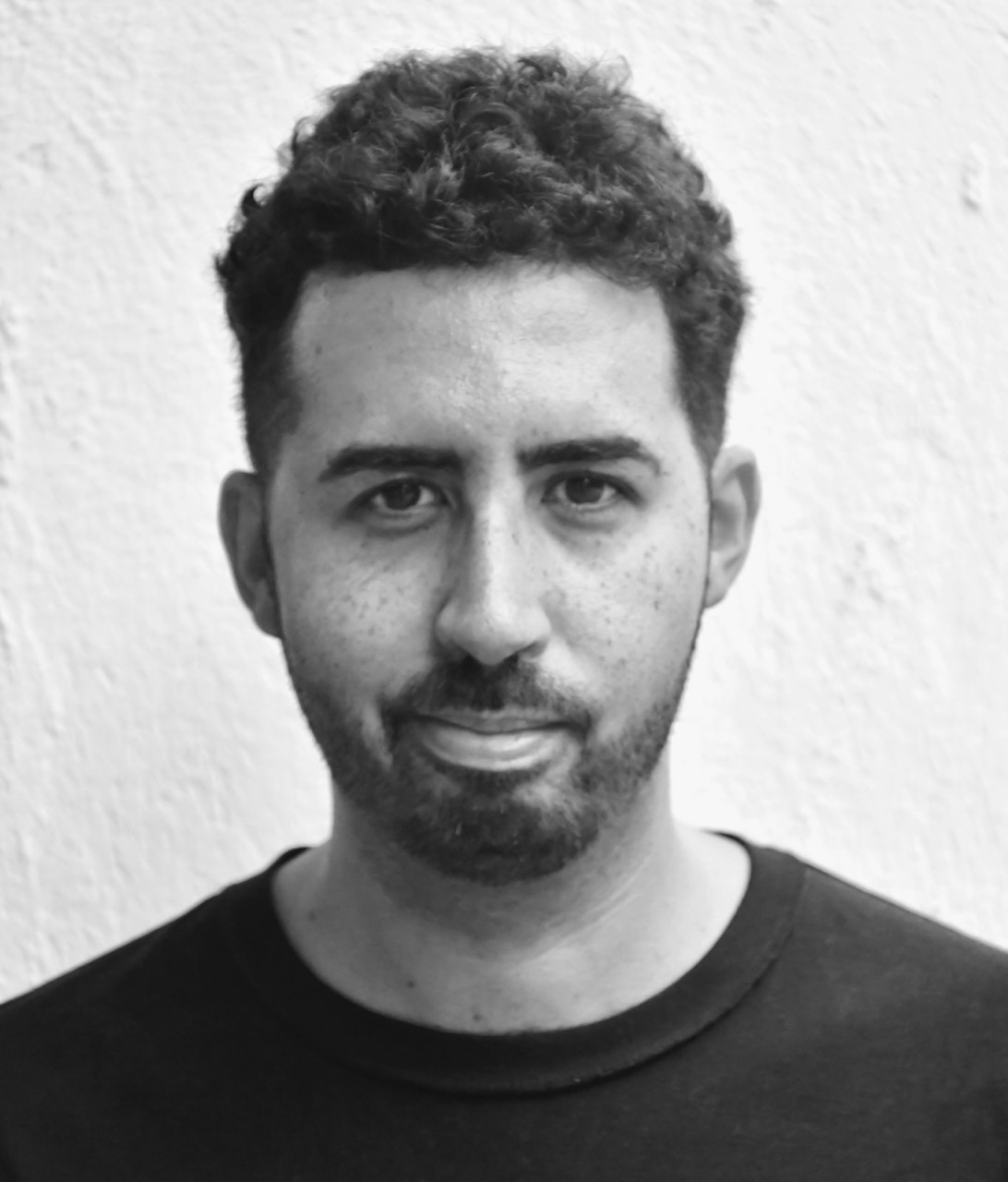
A conversation with Leonard Cortana, Inclusion Program and Strategic Partnerships Manager at EURODOC, on ethical co-production and the producers behind the documentary backbone. Interview by Anne Marie Borsboom, Founder of ShareDoc
EURODOC was founded in 1999. What was the primary motivation behind its creation?
Leonard: EURODOC was born from the desire to provide documentary producers with a dedicated platform to meet, train, and navigate the complexities of international co-production. At a time when very few programs existed specifically for producers, despite their central role as the backbone of any film project, it felt essential to bring them together within a shared cohort. The aim was to foster learning through mentorship, peer exchange, and collaborative thinking, ultimately enabling participants to become confident co-producers. This is particularly crucial in the documentary field, where producers must navigate specific challenges related to funding, audience engagement, and distribution in order to bring projects to completion.
Over the years, the program has become increasingly international. Today, we welcome participants from Asia, Africa, and beyond, and run a dedicated Spanish-speaking cohort bringing together producers from Europe, Latin America, and the Caribbean. In parallel, we have developed regional initiatives, including short-format programs focused on the Mediterranean and the Amazonia–Caribbean regions, as well as a dedicated docu-series program.
Our focus has also sharpened around creative documentary, films driven by strong narratives and distinct aesthetic approaches, often intended for theatrical circulation. In an increasingly polarized world, we consider documentary cinema as both a laboratory for intercultural collaboration and a space to reflect, engage, and challenge dominant narratives. Through these processes, we aim to support filmmakers in developing work that not only demonstrates strong artistic vision but also fosters empathy, critical dialogue, and meaningful social impact, grounded in a clear sense of positionality.
How do you differentiate your mission from programs like EAVE?
Leonard: Our missions are closely aligned: supporting producers in bringing their projects to completion, while offering a space for networking and exchange in an industry that can often feel isolating and demanding. Producers, in particular, must navigate a wide range of responsibilities, making such spaces essential.
What distinguishes EURODOC is our exclusive focus on documentary producers. The documentary and fiction industries face very different challenges, whether in terms of resources, production timelines, or approaches to storytelling and the production process. Our methodologies are therefore specifically tailored to the needs of documentary practice.
That said, these approaches are not mutually exclusive. Many participants engage with both EAVE and EURODOC programs, and this cross-experience are extremely enriching, offering complementary perspectives on production.
What I particularly value across both our programs and many others that have helped shape the industry is the shared commitment to gathering data, publishing reports and roadmaps, and positioning ourselves as knowledge hubs. As training labs with specific expertise, we have a responsibility to engage in dialogue with policymakers, in order to better support the sector and contribute to a more inclusive, informed, and forward-looking film industry, one that acknowledges both its achievements and the challenges ahead.
Your own background is quite unique. You’ve been with EURODOC for three years, but you didn’t start in the film industry, did you?
Leonard: Yes and no actually. I have actually been working in the film industry for 17 years, starting as an assistant programmer for a film festival. It is true, however, that my work in the film industry has always been intertwined with my work in NGOs and humanitarian assistance.
Throughout my career, I have used theatre, video, and documentary filmmaking as tools for social integration and community engagement. I worked as a youth worker and participated in, as well as organized, training programs for the European Commission’s youth initiatives, now known as Erasmus+. Even at that time, I was already using films and post-screening discussions as opportunities to exchange knowledge and foster empathy among participants from different cultural backgrounds.
Today, part of my work is running workshops and designing what I call “ethical Q&As.” I believe that the conversations surrounding films deserve the same level of care and intentionality as the films themselves. These exchanges should be grounded in horizontal dialogue with audiences and facilitated through professional moderation that respects both the subject matter and the people represented on screen.
I also believe we need stronger protocols and support systems for moderators, hosting organizations, filmmakers, and participants.
Where did this love for cinema originally begin?
Leonard: It started with Krzysztof Kieślowski. During my final year of high school, I discovered The Decalogue and fell completely in love with it. The series deeply impacted me, prompting me to reflect on how historical memory and cinema can reveal so many layers in the ways we understand the legacy of past events and their lasting influence on society.
Later, during a university exchange in Chile, I discovered a small art-house cinema behind my university that screened two films a day. Since I did not grow up in a “film family,” I spent almost every day there, trying to catch up on everything I had missed. It was a bit like friends of mine who get tattoos and feel they can never stop after the first one—once I began discovering all the classics I had never seen, I simply could not stop.
I quickly realized that cinema was a window into worlds I did not know and, in many cases, might never experience during my lifetime. Through films, I could encounter different histories, cultures, political realities, and ways of being in the world. Over time, cinema became part of my DNA. I still need to watch several films a week to stay inspired, and I continue to love exploring different cultural contexts through cinema.
You’ve also worked as an “impact producer.” How does that role bridge the gap between film and social change?
Leonard: Like many people working in impact today, I was doing the work long before I knew there was a name for it.
During my years as a youth worker, I used film as a tool to help young people find the language to tell their own stories. We live in a society that is often driven by adults speaking on behalf of youth, so creating spaces where young people could think, create, and express themselves was incredibly important. Through filmmaking, they learned how images are constructed and how narratives are shaped, making them less vulnerable to manipulation, misinformation, and fake news.
Today, in my doctoral research, I explore the memory and legacy of activists and social movements, as well as their transnational circulation. I am interested in how a film from Colombia, Brazil, or South Africa, for example, can resonate with audiences in Europe by revealing something important about our own cultural and political contexts. Films travel, and with them travel memories, struggles, and ways of understanding the world.
People often think of impact producing primarily as a call to action directed at audiences. While that is certainly part of the work, I see impact producing as something much broader. It begins during the development of a film itself: reflecting ethically on relationships with protagonists, considering access to archives, thinking about questions of representation and power, and imagining different pathways of circulation that can generate different forms of impact.
What matters most to me is thinking about impact producing as a kind of muscle memory—something that becomes integrated into the way we make films. It is a habit of ethical reflection, a practice of constantly questioning the power we hold as filmmakers, producers, and cultural workers. Sometimes that power can help raise awareness or contribute to social change. At other times, its role may be more modest but equally important: creating spaces for dialogue, fostering empathy, and making public conversations more nuanced and complex at a moment when so many of our social debates are becoming increasingly fragmented.
Can you name a few films that you feel truly succeeded in their impact?
Leonard: At the Movies that Matter Festival, where we met, I had just seen a French documentary called This Is My Body, directed by Jérôme Clément-Wilz. The film follows the director’s own journey as he seeks healing and justice after experiencing clerical abuse.
What struck me most was how the film functions as a raw and deeply moving laboratory of investigation. The camera becomes much more than a recording device: it becomes a tool for survival, healing, and accountability. As Clément-Wilz explained, “When I filed a complaint against the former priest who abused me, I compulsively picked up the camera.” Through the filmmaking process, he not only confronts the abuse itself but also interrogates the responsibility of those around him—the relatives, friends, and members of the community whose silence allowed the abuse to remain hidden.
I would also like to mention another project that deeply shaped my understanding of impact work: Murder in Paris, directed by Enver samuel a documentary investigating the assassination of anti-apartheid activist Dulcie September. I was one of the impact strategists working closely with the team to help shape strategies that would spread awareness of September’s legacy, not only as an ANC activist but also as a teacher, educator, and community leader.
My role focused on developing educational initiatives and media campaigns that could bring greater visibility to her life and work, we actually use the word un-erase while supporting ongoing efforts for justice. One of our central goals was to contribute to reopening a case that had long been treated as a cold case. Through sustained advocacy, public engagement, and partnerships, we helped create conditions that led to the reopening of technical hearings in France, creating new opportunities to pursue justice routes in South Africa and beyond and becoming a powerful tool in supporting the family’s fight against impunity.
.
EURODOC is known for “360-degree” training. What does that mean in practice?
Leonard: As much as a 360° training program represents the most comprehensive form of professional development, bringing together a wide range of methodologies, perspectives, and access to experts, it also celebrates the role of the producer as a 360° coordinator: someone who brings together different talents, disciplines, and visions to shape the making of a film.
What makes the experience particularly unique is that it is not only about your own project. It is a peer-learning environment where you become, in some ways, the voice and advocate for twelve different projects. The learning goes far beyond fundraising or financing strategies. It is about exchanging know-how, discovering different production cultures, and challenging assumptions about how films can be made. When participants come from countries connected through complex postcolonial histories, these conversations can become especially rich and transformative.
Many people describe co-production as a “marriage,” but I often like to challenge that metaphor because reality is far more complex. Co-production is an ecosystem of different ways of thinking, working, and understanding the world. It is a process of constant negotiation and collective rewriting, shaped by all the talents involved.
For me, the 360° dimension also includes advocacy and the ongoing fight for more ethical co-production practices. This means supporting filmmakers and producers from the Global Majority in accessing markets, funding opportunities, and professional networks. It means asking how we can create more sustainable production models where local communities are trained and employed within the film industry, rather than automatically flying in workers from the Global North for every position.
These questions are central to the work we do through the BIPOC EURODOC Task Force that I coordinate within EURODOC. Through workshops, think tanks, and collective discussions, we create spaces to reflect on equity, access, power dynamics, and the ethics of international collaboration. Our goal is not only to diversify who gets to make films, but also to rethink how films are made and how partnerships are built across different regions of the world.
You’ve mentioned that a lack of data is a major hurdle for the industry. How are you addressing that gap?
Leonard: We organize think tanks also to collect data because it’s a huge issue in the documentary world. Without data, you can’t go to policymakers and ask for better support. We believe labs are vital spaces for collecting this information on a human basis because, over a period of time, we become close to participants and can understand both their challenges and what actually works for them. This is extremely valuable when transformed into recommendations for policymakers.
Alternative platforms like ShareDoc provide a kind of “respiration” for the industry, offering different ways of getting funding and building awareness around films. In the traditional system, the relationship between producers and audiences is often fragmented. But on a documentary platform like ShareDoc, where you can co-design campaigns and connect directly with audiences, filmmakers and producers can also rethink their impact on their communities.
Sometimes you are afraid to make the jump, but when you see the impact, impact you didn’t even imagine when you started, you realize it’s worth it. And this is what I have felt in all the actions I have talked about since I started working in the industry. Even if they are small steps, one at a time, they open horizons and wishes for making our industry always more inclusive.
See the laboratory in action
Leonard often describes documentaries as “a laboratory to discuss, reflect, and hopefully provoke real change.” ShareDoc is one of the spaces where that laboratory meets its audience. During this session, we will explore the documentaries available on the platform and reflect on the ways they generate engagement and impact across different communities. [private event]
We feel it is particularly important to create this opportunity for ShareDoc to meet the EURODOC community and discuss how crowdfunding has evolved over the years, as well as how platforms like ShareDoc can create new forms of communication between producers and audiences. Beyond financing, these platforms encourage filmmakers to think differently about audience engagement and long-term relationships with communities.
See the laboratory in action : ShareDoc will participate as a speaker for the EURODOC's 2026 online program, on Monday, June 26th, from 4PM to 4:30P