
 DE
DE
 EN
EN
 FR
FR
 ES
ES
Interview by Anne Marie Borsboom, Founder ShareDoc.
Maria: We have a very intentional structure this year. And Our aim is to bring empathy to global conflicts. We open by looking out at the world and close by reflecting on where we are.
- Official Competition: Focused on that "humanistic" view and empathic storytelling.
- Official Short Film Competition:
- Visions: This is where we push boundaries. We look for experimental language and films that use science and technology (like forensic technology) to question official narratives.
- Focus Theme - The City: We are exploring urban environments in crisis—Gaza, Beirut, Damascus, and our own Barcelona—focusing on creators who film their homes under the pressures of war or gentrification.
- Retrospective: Dedicated to our "Doc of Honor," which this year is Mark Cousins.
- Docs & Teens: Our morning screenings specifically designed for high school audiences.
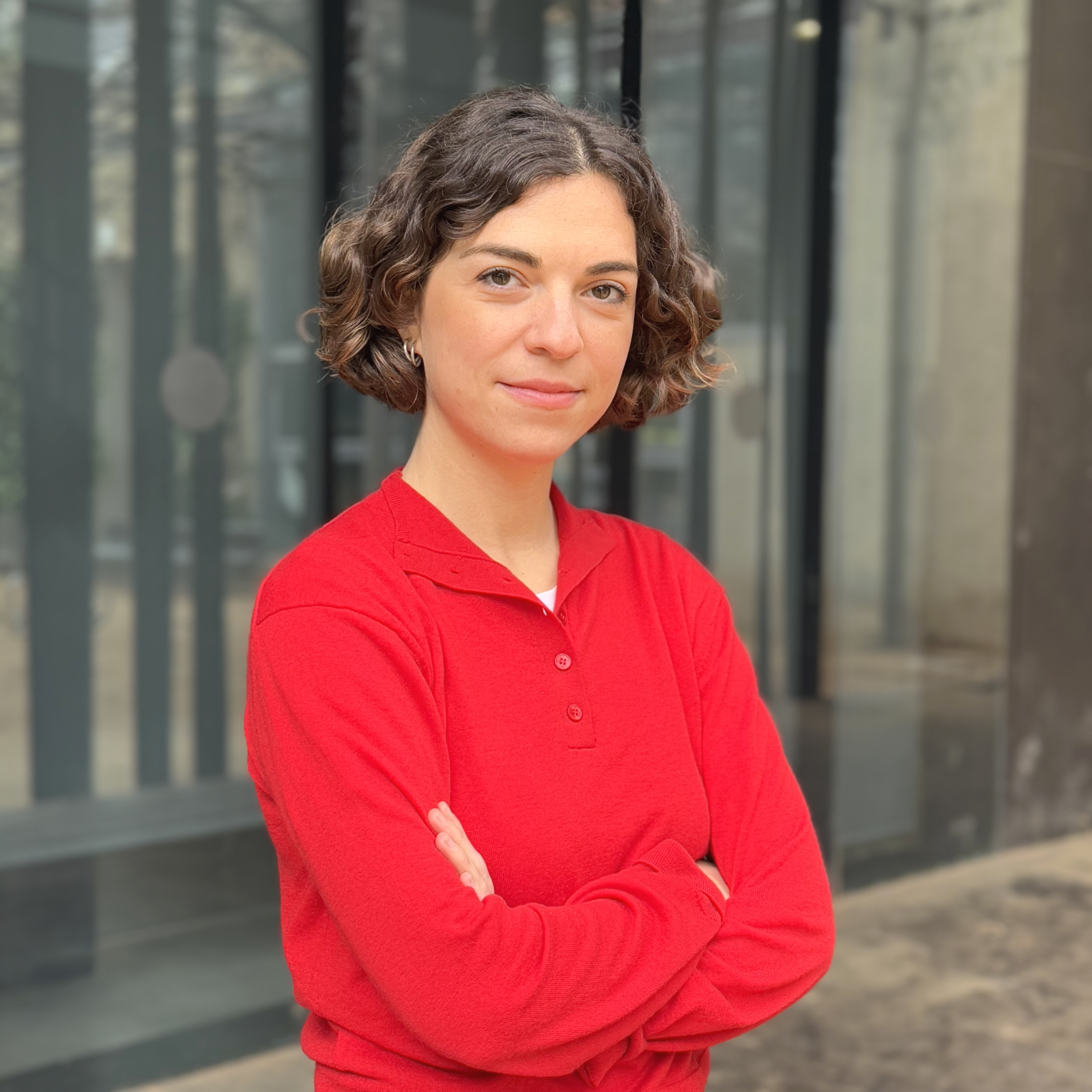
The Path to Docs Barcelona, tell us about your background in the documentary world?
Maria: This is my second year at Docs Barcelona. Before this, I spent six years in Copenhagen working for the WHY Foundation, an NGO and film production company. When I eventually moved to Barcelona, I continued working as an executive producer in documentaries.
Many people in the industry have that "lightbulb moment"—a film that changed how they viewed the medium.
Maria: It happened when I volunteered at CPH:DOX. I watched 30 documentaries in ten days. Even though I was studying cinema at the time, that week was my real opening into the documentary world. Two films, in particular, stayed with me:
- A Syrian Love Story (Sean McAllister): It transformed a complex geopolitical conflict into a human story I could finally feel and understand.
- The Act of Killing (Joshua Oppenheimer): It showed me how creative cinematic language could be used to explore reality without being a mere "reportage."
How do those early experiences influence the films you select for Docs Barcelona today?
Maria: Yes we have a programming Philosophy: Empathy Over Statistics. Our aim is to bring empathy to global conflicts. In the news, we see numbers—death tolls, oil prices, political shifts. At Docs Barcelona, we look for the human consequences
A Shift in Demographics: Who is the Docs Barcelona audience? Do you struggle to attract younger viewers.
Maria: We are still using "analogue" data collection—paper ballots—so we don't have perfect metrics, but we see a loyal, older audience. However, we are fighting to change that. We’ve moved beyond just screenings; we now host talks, concerts, and immersive experiences to turn a film into an "event."
And we have more women than men audiences.
Could you explain why?
Maria: We definitely have more women than men, I have a theory about that. In the wider film industry, money and power are often concentrated in male-dominated fiction spaces. The documentary world is a bit more "gentle." It's less about fame and big budgets and more about intimate stories. Women have carved out a significant space here—not just as viewers, but as directors and producers.
I mean, it’s not that we are a human rights film festival or a social rights film festival, but I think women... there’s more women in the documentary industry than men. Also behind the camera, which is something that we have always said, like, "Oh, we have only male directors." And I always thought, well, not in documentaries. We have female directors.
I think documentaries are less, like tools that are related to power and money. And my theory would say that women feel /have more space there. So they have made documentaries their place, both as an audience and as creators. It’s like they are less bothered by these big male figures.
And maybe also because documentaries sometimes are less huge production. They are more like, okay, an intimate story, maybe I don’t know, it can attract more a female audience than a male audience.
And maybe that’s also why you love documentaries? For the same reason?
Maria: Yeah, it’s a more gentle environment. It’s more—if you go to a documentary film festival, there’s not so many famous people. There’s not so much money. So everyone is included at the party. It’s easier to talk to everyone. And I think that is part of the whole documentary world AS for the audience.
Is the audience mainly Spanish?
Maria: Yeah, we have mostly a local audience. So even though the industry part of Docs Barcelona is strong, we don’t have that big amount of industry participants from outside.
I see the program leads us from from Iran to Catalonia?
Maria: Yes we are opening with A Fox Under a Pink Moon by an Iranian filmmaker. He will be attending with the protagonist, Soraya. It’s vital for us to look at Iran and the migration stories affecting Europe right now.
We actually wanted to host an exhibition of Soraya’s art at the festival that you see also in the film, but the production timing didn't quite line up. But it’s great her artworks can be found on the ShareDoc platform where the audience can support by buying Soraya’s artworks. It’s beautiful way to handle, It fits perfectly with our mission: if a film creates empathy, the audience naturally wants to do something with that feeling.
We close the festival by looking "home." We have a 30-minute performative piece about Barcelona by a local artist. It’s a celebration of Catalan culture, folklore, and absurdity.
We open by looking out at the world and close by reflecting on where we are...