
 ES
ES
 EN
EN
 FR
FR
 DE
DE
Interview by Daria Podsiadalo ShareDoc Ambasador & Filmmaker
The Last Ambassador: Manizha Bakhtari is defying the Taliban
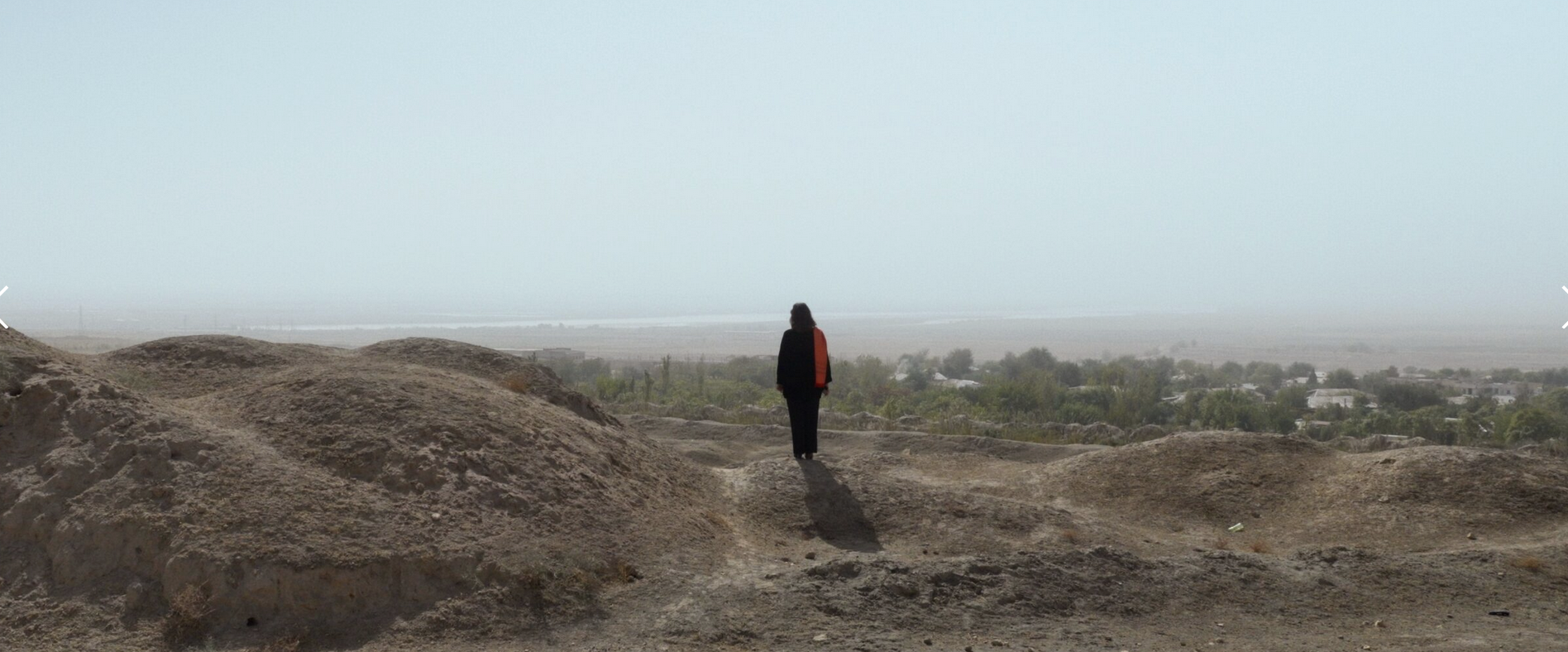
The Afghan ambassador in Vienna, Manizha Bakhtari, has found herself in a bizarre situation since the Taliban took power. Despite financial and logistical isolation, Manizha Bakhtari is defying the Taliban to continue her fight for the rights of Afghan women and girls as an ambassador. Through her Daughters´ Programme, she enables secret education to Afghan schoolgirls. She becomes one of the most important international spokespersons for the women of Afghanistan, true to her motto ‘peace is not the absence of war, but the presence of justice’. ShareDoc platform is used to support Manizha Bakhtari with her Daughters Programme and fight against gender Apartheid in Afghanistan
How did you get started with The Last Ambassador
Natalie: I wanted to make a film to break the silence about what was happening to women and girls in Afghanistan. And when I first saw the ambassador, Manizha Bakhtari, it was through an important news piece in Austria. I was really impressed by her story.
Besides being an ambassador, her main work is fighting for women’s and girls’ rights in Afghanistan, using every platform she has. So that really motivated me.
She is a fighter. She’s a great woman. And whoever watches The Last Ambassador walks out feeling like they have to do something themselves. It really became an impact-campaign film, not only for women and girls in Afghanistan, but in a way for everyone, and for every woman who has something to fight for. There’s something about Manizha Bakhtari’s personality, she’s so strong and so convincing, that people think, okay, if she’s doing this, I can also do it.
Was an impact campaign a part of the plan for the film from the beginning?
Natalie: It grew organically as I was producing and co-producing. I had Golden Girls, a Vienna-based production company, on board, luckily. Over time, I understood from the very beginning that this was an important film that shouldn’t only go to festivals. It needed to be shown in the diplomatic world, within the United Nations, and in all kinds of organizations that could raise awareness about the situation for women and girls in Afghanistan.
When did you first hear about ShareDoc?
Natalie: I think it was around the world premiere at CPH:DOX when we were contacted by Anne about ShareDoc, and about the possibility to raise funding through ShareDoc. The Daughters program, which the film is partly about, definitely needs funding to support women and girls in Afghanistan, for complementary education and support. So we realized this could be a real chance to raise financing and funding.
Somehow we didn’t have time to get back to her, and then the film screened at Hot Docs in Toronto, and she contacted us again. So thanks to Anne-Marie for being so persistent….and that’s great, because she fits our spirit and we also don’t give up. I finally found the time to create the landing page. And from that moment on, we started raising, a pretty interesting amount of support in a very short period of time. Until now, more than 17,000 euros. It makes a difference. It was really surprising because we had no time to advertise this kind of funding.
After screenings, many people approach us and ask what they can do, and if they can support the girls, and so on. We were involved in so many things, and we didn’t have someone dedicated to driving a donation campaignt. But the movie itself, and the power it had, convinced the audience that they wanted to do more. And that’s the perfect thing about ShareDoc, it combines a strong movie with a platform where people can land and support whatever cause the film is aiming for.
You also enabled the hands-on support button which allows audiences to give support other than financial support.
Natalie: Of course it’s great to have support in an hands-on manner, but in the end it also takes more time if you have a small crew to guide volunteers. So the hands-on button, maybe in our case, wasn’t the wisest decision. But the financing button, that one is definitely for us, and for the Daughters program, it’s the perfect solution.
Are there any strategies you can share with other filmmakers?
Natalie: Strategies to share from the impact producing side? I realized, and I always knew it anyway, that it’s worth knocking on many doors. And usually those doors open when you have a strong product in your hands, and when people feel you’re not doing this for yourself, you’re doing it for a bigger cause. And not be shy about contacting whatever organization or individual might be interested in the topic. We were surprised by how many positive reactions we got. It was more a matter of time.
Did it feel like a personal duty to do the impact producing yourself?
Yeah, you know, when you make a film, it’s never over right away. It takes years until you can kind of say goodbye to the topic, if you ever can. You’re involved for a long time. And of course it makes sense, because I make films to create change, not just… I mean, the main reason is that I want to tell a strong story, and with this story move people to do something. So part of my job, personally, is then really, once the film is finished, to bring it to bigger audiences and keep raising the topic. And yes, it’s exhausting, because in your mind the film is finished, and you’d like to rest or start a new project. But this past year I was kind of blocked time-wise, because I had to put all my time and effort into raising awareness for this film. Still, I felt it was my duty, and I’m happy I did it. And I’m still doing it, because the film is still traveling and it’s not finished yet.
But yes we’re working now together with an impact producer Farhat Ariana Azami. At least I’m not alone. And it definitely makes sense to hire an impact producer, but honestly it’s also a matter of financing. This film is important to screen within the diplomatic world, we organized screenings just a couple of weeks ago in New York and Washington for UN diplomats, ambassador staff, and ambassadors from all over the world. And screenings like this in Berlin and in London. The Austria Cultural Forum supports us and helps us deliver the message, and serves as a platform for showing the film. So we have a lot of supporters and a lot of people interested in the film. We’re really happy and thankful that the film is getting so much interest.
Can you talk a little bit about the Daughters program?
Natalie:
Yeah, the Daughters program is basically an initiative that brings together women from all around the world with girls in Afghanistan, to create individual partnerships and mentorships. We need financing because we need local women there who supervise that the girls are okay, and that the money they receive from women abroad really goes into education. They also buy tablets and things like that, for girls to receive education online. I have two daughters myself in Afghanistan, and I wanted to try it out. As a non-native speaker, it works, because there’s Google Translate, and one of the girls has great English, so we can communicate quite well. And the idea isn’t just sending a certain amount of money every month to support their education, but also staying in contact, exchanging messages sometimes, and giving them the feeling that they’re not totally isolated and not totally alone.
So you basically sponsor a “daughter” and fund her education with a contribution?
Natalie:
Yes, correct but of course the Taliban are a problem. It depends on which Taliban and which places. In certain areas, the Taliban know there are secret schools, and in others they fight it completely. Online schools can help, but of course not every girl in Afghanistan has reliable internet access. There are many limitations, and the only thing that would really change it is getting rid of the Taliban. That’s the only real solution for education for these girls. Everything else is just a workaround, but for a family it can still make a difference.
What’s the next step for the film?
Natalie:
The film will start screening on TV soon, so it will reach a broader audience. This is now the second year, and there are still many festivals that want the film. And Manizha Bakhtari is still the ambassador, she’s still in Vienna. And as long as she continues, I’ll continue supporting her.
Is there anything you would like to say about ShareDoc to fellow filmmakers?
Natalie:
I think it’s a great opportunity, definitely. It’s very easy and fast to build a landing page through ShareDoc. I think it took me, I don’t know, an hour, and it was finished. And then it’s a great option for people who watch the film and want to help. Any filmmaker knows this feeling, when people come and say, how can I help, how can I support you? In that sense, ShareDoc is a really great opportunity. And it doesn’t take extra time beyond setting up the landing page. Of course you still have to think about where the money goes and what good it will do. But depending on the topic, that’s usually easy to define. So I would really encourage any filmmaker to use the platform. For me, for us, and for the girls in Afghanistan, it went really well.